What if a Fat Person Never Ate Again?
The traditional view behind weight gain is simple, more calories in and less calories out equals weight gain. Nosotros've all heard it, we all effort it, but why is it and then difficult to stick to? Your body is working confronting you every footstep o f the manner, why? And what is the solution?
Every solar day nosotros are surrounded past temptation, we eventually give in, we overeat. We and so never burn those backlog calories off which of course means they go deposited every bit fatty… correct?
But what if we take been looking at this the wrong way? What if we take the cause and effect mixed up? Could it exist that it'due south non overeating that causes us to go fatty, but instead it's being fat that causes us to overeat?
This is the theory that has been put forward in a recent article published in the Journal of the American Medical Clan. The article suggests that the more fatty tissue we have, the more than calories are taken and locked abroad in this fat tissue, leaving fewer calories in the bloodstream to satisfy your trunk'southward requirements. This results in your torso needing more than and more calories. The more fatty we have, the more we demand to eat.
Basically, we get hungrier because we are getting fatter.
What does this all hateful?
Basically, most of us are stuck in a cycle. We swallow the boilerplate nutrition, which these days includes chips, bread, processed sugar and wheats, which leads to higher insulin levels, which leads to weight gain, which leads to more fat cells, these fatty cells and then steal your calories, causing you to feel hungry, which ways you'll eat more of the insulin-producing foods, which leads you lot back to the showtime of the bike, and unless something changes y'all'll continue to get around and around, (and get rounder and rounder).
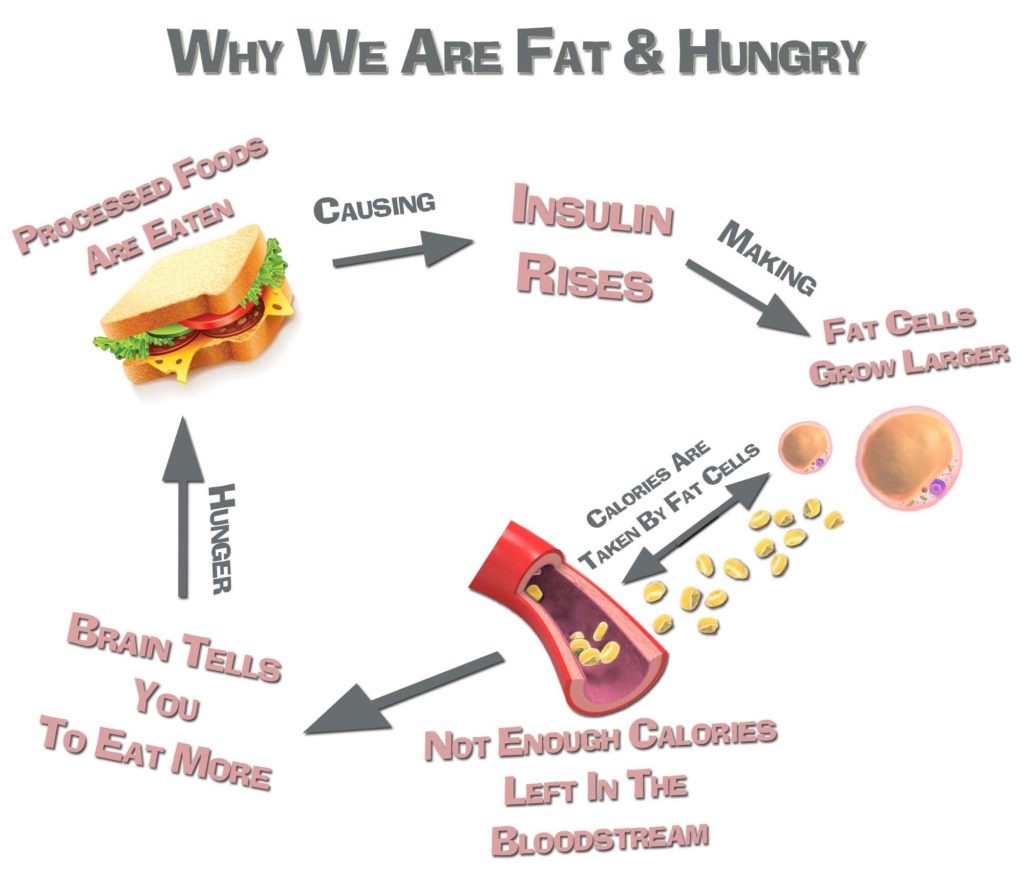
How does it happen?
When calories are stolen by your fat cells, your body loses the free energy it needs, causing you to feel hungry. These calories that are stolen by your fatty cells crusade the fat cells to grow larger, and you are still eating more than because you even so experience hungry. It'southward like your body is working against you lot.
Just when you lot call up it couldn't go any worse, your body and brain join forces once more to deliver the concluding blow, your metabolism slows downward. Due to these fat cells taking in and storing excessive amounts of glucose and other calorie rich-compounds, less are left to fuel your metabolism. This triggers your encephalon to tell your torso to exercise two things, firstly, increase your energy intake (causing feelings of hunger), and secondly to save energy (metabolism slows down). So you either, a) eat more, which means you'll gain weight, or b) cut calories, which will increase hunger and cause your metabolism to get slower and slower.
This is why diets that focus on reducing calories hardly ever work.
Dr Rudolph L. Leibel has studied this process. In one of his trials, thin and obese people were underfed while others were overfed. Underfeeding led to a slower metabolism, overfeeding led to a higher metabolism, in both cases, peoples bodies responded in a mode that tended to push the weight back to where it started. This resulted in researchers proposing that the trunk has a set weight that is predetermined by our genes.
But if that is the case, then why are obesity rates today, almost triple what they were in the sixties?
Ane word:Insulin.
It is known that excess insulin handling in patients with diabetes causes weight gain, and inversely, insulin deficiency cause weight loss. And what types of food produce the virtually insulin? Highly refined and rapidly digestible carbohydrates. Fries, biscuits, cakes, soft drinks, white bread, sugary breakfast cereals, all of these are prime examples of insulin-producing carbohydrates. The modify in diet over the last half century towards these kinds of foods has led to the increase in insulin levels, putting fatty cells into storage mode and resulting in an obese population.
Ane study which shows simply how much of an affect these kinds of nutrient have on body weight has recently been undertaken. Harvard professor Dr David Ludwig examined overweight and obese individuals who had lost 10-15 percent of their body weight. Their diets ranged from depression-fat diets to low saccharide diets. Dr Ludwig plant that despite consuming the exact same number of calories, the subjects on the low carbohydrate diet burned effectually 325 calories more per twenty-four hours, than those on the low-fat nutrition.
So what are some solutions?
Ultimately we need to eliminate those calorie stealing fat cells. Dieting does not do this. The research then far has suggested that equally long as these fat cells are in your trunk, they will continue to steal calories away for storage. Currently, the just way to remove fat cells is through liposuction. The process that has been traditionally known equally a quick fix for some unwanted fat tin can really produce long-lasting effects.
Removal of these fat cells will hateful less calorie stealing, which will mean less hunger, less overeating, and less insulin production. All equalling long-term weight loss effects. Removing fat in one area may lead issue in an overall weight loss result.
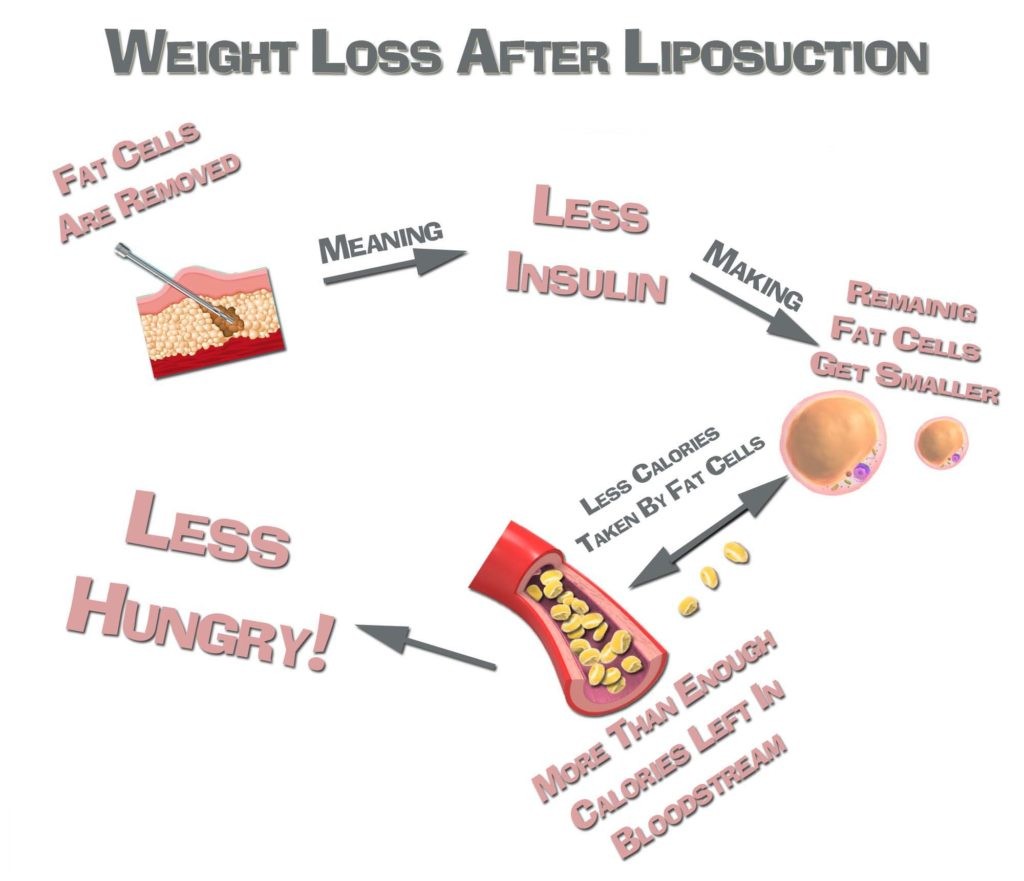
This view does not come as a surprise to Liposuction proficient, Dr. Joseph Ajaka.
"I've always believed liposuction has a long lasting weight loss consequence."
After performing over 5,000 liposuction procedures, Dr Ajaka has seen this effect commencement hand, many times.
"In patients who take had large volume liposuction especially, they all report a reduction in their appetite after having had liposuction performed."
Further to this, Dr Ajaka has found that his diabetic patients report a reduced amount of insulin required later having liposuction performed. "Lap –band surgery has been the get-to procedure for obese people trying to lose weight, this blazon of surgery is very risky and can take major complications. Now, finally, hither is some proof that liposuction may be the better selection for overall weight reduction."
curriedrebeguing1998.blogspot.com
Source: https://www.cosmosclinic.com.au/blog/go-fat-never-go-back-fat-people-cant-stop-eating/
0 Response to "What if a Fat Person Never Ate Again?"
Postar um comentário